Category: Uncategorized

  • What to Do After Receiving a Legal Notice? A Step-by-Step Guide

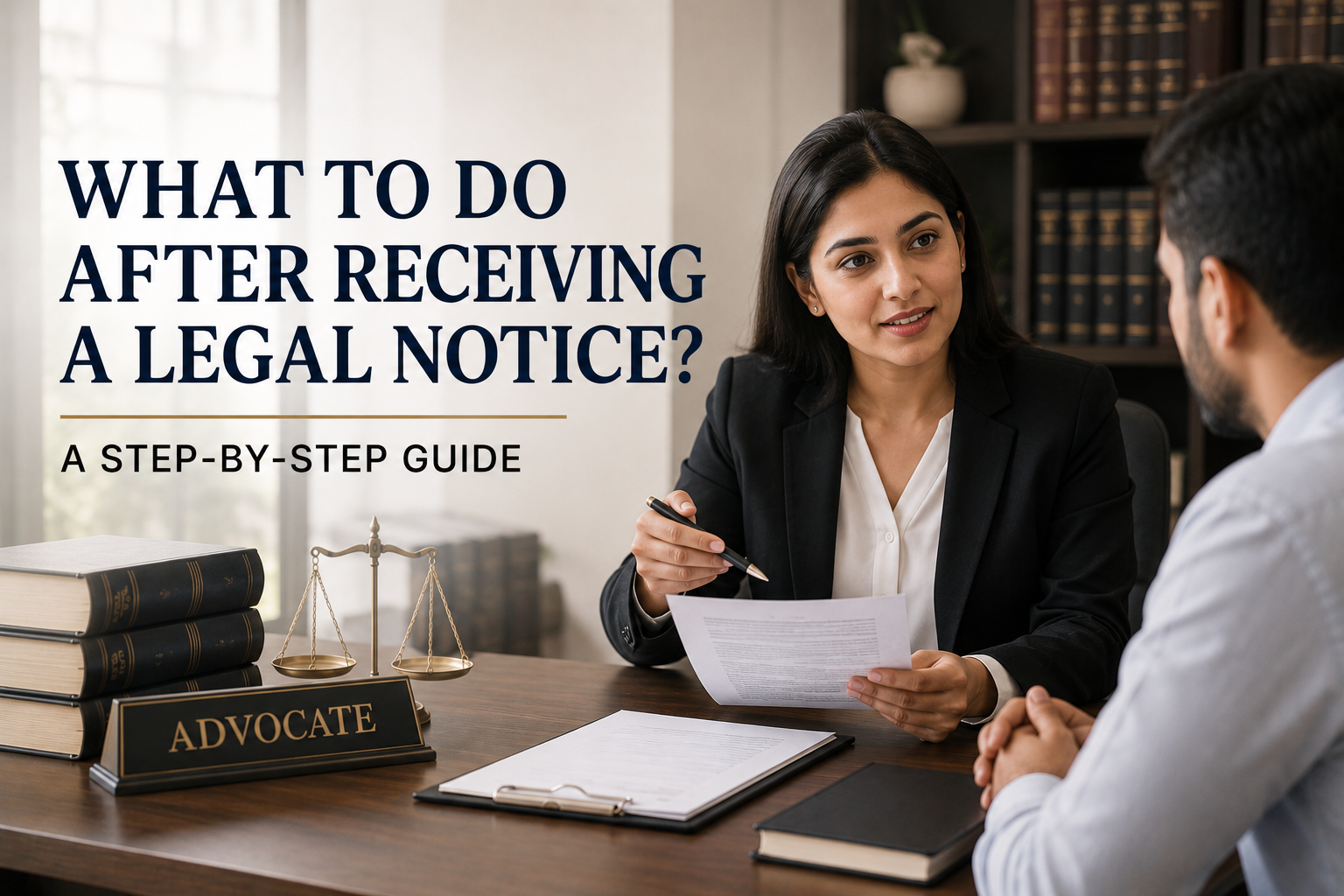
    What to Do After Receiving a Legal Notice? A Step-by-Step Guide

    What to Do After Receiving a Legal Notice? A Step-by-Step Guide

    Receiving a legal notice can be stressful, especially when you are unsure about what it means, why it was sent, or what you should do next. Whether the notice relates to a property dispute, unpaid dues, contractual disagreement, family matter, business issue, or another legal claim, taking the right steps at the right time is important.

    A legal notice does not necessarily mean that you have already been taken to court. However, it can be an important step before legal proceedings and should not be ignored.

    If you have received a legal notice, Adv. Sharda Singh Kaur can help you understand the notice, assess your legal position, and determine an appropriate course of action based on the facts and documents involved.

    Trending Topics

    What Is a Legal Notice?

    A legal notice is a formal written communication through which one party communicates a legal grievance, demand, claim, or intention to take further legal action against another party. Legal notices can arise in many situations, including:

    • Property disputes
    • Contractual disputes
    • Recovery of money
    • Business and commercial disputes
    • Family and matrimonial matters
    • Employment-related disputes
    • Consumer-related issues
    • Breach of agreements
    • Inheritance and succession disputes

    The contents of a legal notice can vary considerably depending on the nature of the matter. Therefore, it is important to understand the specific allegations, demands, and legal implications before responding.

    What Should You Do After Receiving a Legal Notice?

    1. Do Not Panic

    The first step is to remain calm and carefully review the notice. Receiving a legal notice does not automatically mean that you have lost a dispute or that a court has decided against you. It is generally a communication setting out the sender’s position or demand. Avoid making immediate statements or sending an emotional response before understanding the contents of the notice.

    2. Read the Entire Notice Carefully

    Read the notice from beginning to end.

    Pay attention to:

    • Who has sent the notice
    • Who has received it
    • The allegations or claims being made
    • The facts mentioned
    • The documents referred to
    • The demands being made
    • Any deadline for responding
    • The legal action threatened if the matter is not resolved

    Do not focus only on the final demand. The background facts and allegations may be equally important when determining how to respond.

    3. Check the Date and Response Deadline

    One of the most important things to identify is whether the notice specifies a deadline for response or further action. Do not assume that you can respond whenever convenient. Depending on the circumstances, applicable laws and procedural requirements may impose important time limits.

    If the notice contains a deadline, consult a lawyer promptly rather than waiting until the last day.

    4. Collect All Relevant Documents

    Gather every document connected with the dispute. Depending on the matter, these may include:

    • Agreements and contracts
    • Property documents
    • Invoices and payment records
    • Emails and messages
    • Previous correspondence
    • Receipts
    • Bank records
    • Court documents
    • Government or official documents
    • Photographs or other relevant evidence

    Providing complete information allows your lawyer to assess the matter more effectively. If the notice concerns a property dispute, for example, relevant title documents, agreements, possession records, and previous correspondence may become important.

    For assistance with property-related disputes, you can explore our Property Law Services.

    5. Do Not Ignore the Legal Notice

    Ignoring a legal notice may not make the underlying issue disappear.

    Depending on the circumstances, the sender may proceed with further legal action. Failing to respond appropriately may also make it more difficult to present your position later. This does not mean that every notice must be answered in exactly the same way. The appropriate response depends on the facts, legal issues, documents, and demands involved.

    Experience in Legal Practice
    0
    States & UTs Served
    0 +
    Confidential Consultations
    0 %
    Days Client Commitment
    0

    6. Consult a Lawyer Before Responding

    One of the safest approaches is to have the notice reviewed by a qualified lawyer before preparing a response. Adv. Sharda Singh Kaur can review the contents of the notice and relevant documents to help identify:

    • The nature of the legal dispute
    • The claims being made against you
    • Your potential legal position
    • Important documents and evidence
    • Possible responses
    • Potential risks
    • Available legal remedies

    Professional advice can be particularly important where the notice involves significant financial, property, business, family, or personal consequences. You can seek professional assistance through our Legal Consultation Services.

    7. Verify Whether the Claims Are Correct

    Do not automatically accept every allegation contained in a legal notice. Compare the statements in the notice with your own records and documents.

    For example, if a notice claims that you failed to make a payment, check your payment records. If it alleges a breach of contract, review the agreement and relevant communications. If it concerns property ownership, examine the applicable property documents. A proper response should be based on facts and evidence rather than assumptions or emotions.

    8. Preserve Evidence and Communication

    Once you receive a legal notice, preserve all relevant records. Do not unnecessarily delete:

    • Emails
    • Messages
    • Agreements
    • Receipts
    • Photographs
    • Payment records
    • Previous notices
    • Letters or correspondence

    Also maintain copies of the legal notice, envelope or delivery information where relevant, and any response that is sent.These records may become important if the matter progresses to further legal proceedings.

    9. Avoid Making Unnecessary Admissions

    Be careful about responding directly to allegations before obtaining appropriate legal advice. An informal message, email, phone conversation, or written statement could potentially become relevant to the dispute. This does not mean that you should refuse all communication. Rather, important communications should be handled thoughtfully and, where appropriate, with professional legal guidance.

    10. Understand Your Legal Options

    Receiving a legal notice does not always mean that the matter must immediately go to court. Depending on the circumstances, possible approaches may include:

    • Negotiation
    • Settlement
    • Mediation
    • Sending a legal reply
    • Compliance with a legitimate demand
    • Challenging an incorrect claim
    • Taking appropriate legal proceedings
    • Defending yourself if proceedings are initiated

    The appropriate option depends on the facts and applicable law. Adv. Sharda Singh Kaur can help you understand the available legal options and determine an appropriate strategy based on your circumstances

    Conclusion

    Receiving a legal notice can be concerning, but you should not panic or ignore it. The most important steps are to carefully understand the notice, check any deadlines, preserve relevant documents, verify the claims being made, and seek appropriate legal guidance before responding. A timely consultation with Adv. Sharda Singh Kaur can help you understand the nature of the legal notice, assess your position, and consider the legal options available to you.

    If you have received a legal notice and are unsure about what to do next, contact Adv. Sharda Singh Kaur for professional legal guidance and discuss your matter with an experienced legal professional.

    Disclaimer: This article is intended for general informational and educational purposes only and should not be treated as legal advice. The appropriate response to a legal notice depends on the facts, documents, applicable law, and circumstances of each matter. For advice specific to your situation, consult a qualified legal professional.

    Trending Topics

    GET IN TOUCH

    Need Trusted Legal Guidance? Let’s Talk.

    Whether you need legal representation, mediation, marriage counselling, or professional legal training, we’re here to provide clear advice and dependable support. Schedule a consultation today and take the first step toward the right legal solution.

    Contact Form Demo
  • When Should You Consult a Lawyer? 10 Situations Where Legal Advice Matters

    When Should You Consult a Lawyer? 10 Situations Where Legal Advice Matters

    When Should You Consult a Lawyer? 10 Situations Where Legal Advice Matters

    Legal issues can arise unexpectedly in everyday life, business, property transactions, family matters, and disputes. Many people consult a lawyer only after a problem has become serious. However, seeking legal advice at the right time can help you understand your rights, responsibilities, available options, and potential risks before taking an important decision.

    So, when should you consult a lawyer?

    You do not always need to wait until you receive a court notice or become involved in litigation. In many situations, consulting a qualified lawyer early can help you prevent disputes, protect your interests, and make informed decisions.

    Here are 10 common situations where professional legal advice can be particularly valuable.

    Trending Topics

    1. When You Receive a Legal Notice

    Receiving a legal notice can be stressful, especially if you are unsure about what it means or how you should respond. A legal notice may relate to a property dispute, payment issue, contract disagreement, family matter, employment issue, or another legal claim.

    Before responding, ignoring the notice, or making any admission, consider consulting a lawyer. A legal professional can review the notice, explain its implications, assess your position, and advise you on an appropriate response.

    Important: Do not ignore a legal notice simply because it is not a court summons. Depending on the circumstances, failing to respond appropriately can affect your legal position.

    2. When You Are Involved in a Property Dispute

    Property-related matters can involve significant financial and personal interests. Disputes may arise over ownership, possession, boundaries, inheritance, sale agreements, tenancy, title documents, or unauthorized construction. If you are buying, selling, inheriting, leasing, or disputing property, legal advice can help you understand the relevant documents and potential risks.

    A lawyer can also help assess the legal aspects of agreements and advise you about available remedies when a property dispute arises.

    3. Before Signing an Important Contract or Agreement

    Contracts can create legally binding obligations. Once an agreement is signed, certain terms may affect your rights and responsibilities.

    This is particularly important for:

    • Business agreements
    • Partnership agreements
    • Employment contracts
    • Lease agreements
    • Sale agreements
    • Service contracts
    • Vendor agreements
    • Settlement agreements

    Before signing an important document, consulting a lawyer can help you understand key clauses, obligations, liabilities, termination provisions, dispute-resolution mechanisms, and other potential risks.

    4. When Starting or Running a Business

    Business owners regularly encounter legal issues involving contracts, employees, customers, vendors, intellectual property, compliance, payments, and disputes.

    Legal advice can be useful when:

    • Starting a business
    • Entering into commercial agreements
    • Hiring employees
    • Resolving contractual disputes
    • Protecting business interests
    • Dealing with a legal notice
    • Negotiating with another party
    • Reviewing important business documents

    Getting legal advice proactively can help businesses identify potential problems before they become costly disputes.

    5. When Facing a Criminal Complaint or Police Matter

    Criminal matters can have serious consequences and should not be handled casually.

    If you are facing a criminal complaint, investigation, arrest-related issue, or other criminal proceeding, obtaining legal advice promptly can help you understand your legal rights and the appropriate procedural steps. A criminal lawyer can assess the circumstances, explain the available legal remedies, and assist with representation where required.

    If you are contacted by law enforcement regarding a serious matter, it is generally sensible to understand your legal position before taking significant steps.

    6. During Divorce or Other Family Disputes

    Family-related legal matters can be emotionally difficult and legally complex. You may benefit from legal advice in situations involving:

    • Divorce
    • Child custody
    • Maintenance
    • Domestic disputes
    • Matrimonial disputes
    • Separation
    • Property or financial issues between family members
    • Succession and inheritance

    A lawyer can explain the legal process, your rights and obligations, and the possible approaches to resolving the matter. Where appropriate, negotiation or mediation may also be considered instead of immediately pursuing lengthy litigation.

    Experience in Legal Practice
    0
    States & UTs Served
    0 +
    Confidential Consultations
    0 %
    Days Client Commitment
    0

    7. When Someone Owes You Money or You Face a Payment Dispute

    Financial disputes can occur between individuals, businesses, customers, partners, employers, or service providers. If someone fails to make a payment despite a contractual or other legal obligation, you may need to understand what remedies are available. Similarly, if someone is demanding payment from you and you believe the claim is incorrect, legal advice can help you evaluate the demand and determine how to respond.

    Depending on the circumstances, options may include negotiation, a legal notice, alternative dispute resolution, or legal proceedings.

    8. When You Are Considering Filing or Defending a Lawsuit

    Litigation can involve significant time, costs, documentation, and procedural requirements. Before filing a case—or deciding how to respond to one—consulting a lawyer can help you understand:

    • Whether you may have a legal claim
    • Possible defences
    • Evidence required
    • Applicable legal provisions
    • Potential costs and risks
    • Available alternatives to litigation
    • Relevant procedural requirements

    A lawyer can assess the facts and help you make a more informed decision about whether legal proceedings are appropriate.

    9. When You Are Dealing With Inheritance or Succession Issues

    Inheritance can become complicated when multiple family members, wills, property, or succession rights are involved.

    Disputes may arise regarding:

    • Wills
    • Inherited property
    • Ownership rights
    • Distribution of assets
    • Succession
    • Family settlements
    • Claims by legal heirs

    Obtaining legal advice early can help clarify the relevant documents, rights, and legal procedures and may reduce the risk of unnecessary disputes.

    10. When You Are Unsure About Your Legal Rights or Obligations

    Sometimes the most important reason to consult a lawyer is simply that you do not know what the law requires or permits in your situation. You may be considering an important transaction, responding to a dispute, entering into an agreement, or making a decision that could have legal consequences.

    Instead of relying solely on assumptions, social media posts, or generic information available online, professional legal advice can help you understand how the law may apply to your specific circumstances.

    Conclusion

    Knowing when to consult a lawyer can be just as important as knowing how to choose one. Legal advice is not limited to people who are already involved in court proceedings. It can also help individuals and businesses understand their rights, assess risks, prepare documents, resolve disputes, and make informed decisions.

    If you are facing a legal notice, property dispute, family matter, business issue, criminal matter, contractual problem, or any situation where you are uncertain about your legal rights or obligations, consider seeking professional legal advice at an early stage.

    Need legal guidance? Contact our legal team to discuss your situation and understand the legal options available to you.

    Disclaimer: This article is intended for general informational and educational purposes only and should not be treated as legal advice. Laws and procedures may vary depending on the facts, jurisdiction, and circumstances of each matter. For advice specific to your situation, consult a qualified legal professional.

    Trending Topics

    GET IN TOUCH

    Need Trusted Legal Guidance? Let’s Talk.

    Whether you need legal representation, mediation, marriage counselling, or professional legal training, we’re here to provide clear advice and dependable support. Schedule a consultation today and take the first step toward the right legal solution.

    Contact Form Demo
  • How to Choose the Right Lawyer for Your Legal Matter: A Complete Guide

    How to Choose the Right Lawyer for Your Legal Matter: A Complete Guide

    How to Choose the Right Lawyer for Your LegalMatter: A Complete Guide

    Choosing the right lawyer can make a significant difference when dealing with a legal issue. Whether you are facing a property dispute, family matter, business issue, criminal case, civil dispute, or need help with legal documentation, having the right legal professional by your side can provide clarity, confidence, and effective representation. However, with so many lawyers and law firms available, knowing how to choose the right lawyer for your specific situation can be challenging.

    This guide explains the key factors you should consider before hiring a lawyer and how to make an informed decision.

    Trending Topics

    1. Understand Your Legal Matter First

    Before looking for a lawyer, identify the nature of your legal issue.

    Different areas of law require different types of legal knowledge and experience. For example, a property dispute may require a lawyer experienced in property and civil law, while a criminal case requires someone familiar with criminal law and court proceedings.

    Start by asking:

    • What type of legal problem am I facing?
    • Is the matter civil or criminal?
    • Do I need representation in court?
    • Do I need legal documentation or only legal advice?
    • Is the matter urgent?
    • Is there a legal notice, deadline, or hearing involved?

    Having a basic understanding of your situation will help you find a lawyer whose expertise matches your requirements.

    2. Choose a Lawyer With Relevant Experience

    One of the most important factors when selecting a lawyer is relevant legal experience. A lawyer may have extensive experience but not necessarily in the specific area of law related to your matter. Look for an advocate who regularly handles cases similar to yours.

    For example, if you are dealing with a property dispute, consider a lawyer experienced in property-related matters. Similarly, business owners may benefit from legal professionals familiar with contracts, commercial disputes, compliance, and business-related legal issues. Relevant experience can help a lawyer understand the legal issues involved and develop an appropriate strategy for your matter.

    3. Check Their Professional Credentials

    Before engaging a lawyer, verify their professional credentials and qualifications. In India, advocates are regulated under the applicable legal framework and are generally enrolled with a State Bar Council. You can also ask about their professional experience, areas of practice, and familiarity with the court or legal forum relevant to your matter.

    Do not hesitate to ask straightforward questions about their professional background. A reputable legal professional should be comfortable explaining their qualifications and experience.

    4. Consider Their Knowledge of the Relevant Court or Jurisdiction

    Legal procedures and practical requirements can vary depending on the court, tribunal, authority, and jurisdiction involved. If your matter is likely to proceed before a particular court or authority, it can be beneficial to work with a lawyer who has experience handling matters in that forum. Familiarity with local procedures, filing requirements, documentation, and courtroom practices can help ensure that your case is handled efficiently.

    5. Evaluate Communication Skills

    Good communication between a lawyer and client is essential. Legal matters can be complicated, and you should be able to understand what is happening with your case. During your initial consultation, pay attention to whether the lawyer:

    • Listens carefully to your concerns
    • Explains legal concepts clearly
    • Answers your questions directly
    • Discusses possible options
    • Explains the potential risks involved
    • Communicates realistic expectations

    You should feel comfortable asking questions and seeking clarification whenever something is unclear.

    6. Ask About the Legal Strategy

    A professional lawyer should be able to discuss the general approach they may take after understanding the facts of your matter. Depending on the case, the strategy could involve negotiation, mediation, sending a legal notice, filing proceedings, defending a claim, or pursuing another appropriate legal remedy.

    However, be cautious of anyone who guarantees a particular result before properly examining your case. No responsible lawyer can guarantee the outcome of litigation. Instead, look for someone who can explain the strengths, weaknesses, risks, and possible outcomes of your matter realistically.

    Experience in Legal Practice
    0
    States & UTs Served
    0 +
    Confidential Consultations
    0 %
    Days Client Commitment
    0

    7. Understand the Legal Fees

    Legal fees are an important consideration when choosing a lawyer.

    Before formally engaging a lawyer, ask about:

    • Consultation charges
    • Professional fees
    • Court appearance fees
    • Documentation or drafting charges
    • Filing and administrative expenses
    • Other potential costs

    Make sure you understand what is included in the agreed professional fee and what may be charged separately.

    Clear communication about fees at the beginning can help avoid misunderstandings later.

    8. Check Availability and Responsiveness

    Your lawyer does not necessarily need to be available every minute, but they should have a reasonable system for communicating with clients.

    Ask how you will receive updates about your matter and who you should contact when you have questions. If your legal matter involves deadlines, court hearings, notices, or urgent action, timely communication becomes particularly important.

    9. Review the Lawyer’s Approach to Confidentiality

    Legal matters often involve sensitive personal, financial, family, or business information. You should be comfortable discussing relevant facts with your lawyer. Ask how your information and documents will be handled and maintained.

    Being completely honest with your lawyer is also important. Withholding relevant information can make it more difficult for your lawyer to properly assess your legal position and advise you.

    10.Prepare for Your First Consultation

    You can make your initial consultation more productive by preparing beforehand.

    Bring relevant documents such as:

    • Agreements and contracts
    • Property documents
    • Notices or letters
    • Court documents
    • Identification documents where relevant
    • Previous legal correspondence
    • Relevant emails or messages
    • A timeline of important events

    Also prepare a short list of questions you want to ask.

    The more accurately you explain the facts, the better the lawyer can understand your situation and advise you about the available legal options.

    11. Watch for Red Flags

    Choosing a lawyer is an important decision. Be cautious if a person:

    • Guarantees that you will definitely win
    • Gives advice without properly understanding the facts
    • Is unwilling to explain fees
    • Pressures you to make an immediate decision
    • Avoids answering reasonable questions
    • Makes unrealistic promises
    • Encourages you to hide or misrepresent important facts

    Professional legal advice should be based on the facts, applicable law, evidence, and realistic assessment of your circumstances.

    Final Thoughts

    Choosing the right lawyer for your legal matter is not simply about finding the most well-known or highly reviewed professional. It is about finding someone whose experience, area of practice, communication style, professional approach, and availability align with your specific legal needs.

    Take time to understand your legal issue, research suitable legal professionals, ask the right questions, and discuss fees and expectations before making your decision.

    If you are dealing with a legal issue and are unsure about the appropriate next step, seeking professional legal advice can help you make a more informed decision.

    Need legal guidance for your situation? Contact our legal team to discuss your matter and understand the available legal options.

    Trending Topics

    GET IN TOUCH

    Need Trusted Legal Guidance? Let’s Talk.

    Whether you need legal representation, mediation, marriage counselling, or professional legal training, we’re here to provide clear advice and dependable support. Schedule a consultation today and take the first step toward the right legal solution.

    Contact Form Demo